
When a failed PLC or servo drive board halts a million-dollar line, OEM replacement is often slow, overpriced or discontinued. Reverse engineering that single PCB — then remanufacturing it to spec — restores the machine faster and far cheaper, with full documentation as a by-product.
The scene, which you may recognize
A production line stops. The maintenance team traces the fault to a control board inside a machine that has run faithfully for fifteen years. The board is charred in one corner. The machine's manufacturer quotes a replacement part on a multi-month lead time — or replies that the part, and the machine series, are discontinued. A refurbished board surfaces on the second-hand market at a punishing price, working condition unknown. Meanwhile the line accumulates downtime cost by the day.
This scenario repeats across every industry with long-lived capital equipment: CNC machines, packaging lines, robots, printing presses, injection molders, elevators, power distribution. The machine outlived its electronics supply chain. And the board — not the machine — is the whole problem.
The machine is fine. The board is dead. Nobody sells the board. Somebody has to become the board's manufacturer.
That somebody can be you. Reverse engineering — recovering the board's design and rebuilding it — is the path that turns a stranded machine back into a producing one. It's the same discipline described in our five-step reverse engineering walkthrough; this article is about what it looks like when the stakes are a production line.
Why automation gear always outlives its electronics
Industrial machines are engineered for 15–30 year service lives. The electronic components inside them average 5–10 year availability. Every automation fleet therefore drifts toward the same cliff: the machine is mid-life, the boards are end-of-life, and the OEM's attention has moved to the current product generation.
The standard failure points are well known: drive and power boards stressed by heat cycles, I/O boards corroded by workshop air, operator panels worn by contact, and perfectly healthy boards that simply can't be bought as spares anymore. We cover the component-side mechanics of this in beating component obsolescence — the board-level consequence is the same story at machine scale.
Your four options, compared honestly
| Option | Cost | Lead time | Repeatability |
|---|---|---|---|
| OEM spare part | High for legacy equipment | Weeks to months; often "NLA" | None — supply shrinks over time |
| Refurbished board | High (scarcity-priced) | Depends on luck | None — you bought someone's old stock |
| Component-level repair | Low–moderate | Fast | Low — fixes the symptom, ages the rest |
| Reverse engineering rebuild | Engineering cost, then normal build cost | Scoped per board | Unlimited — you own the design |
Component-level repair deserves its honest due: for a single recent failure on an otherwise sound board, a good repair tech is the fastest and cheapest answer. Where repair ends and rebuild begins is repeatability and risk — a repaired 15-year-old board is still a 15-year-old board, and when a machine's availability matters, "we can only fix it once more" isn't a strategy.
A rebuild, start to finish
Here's the shape of a typical industrial rebuild on our bench — a composite of the power and control boards that arrive at our reverse engineering desk most often:
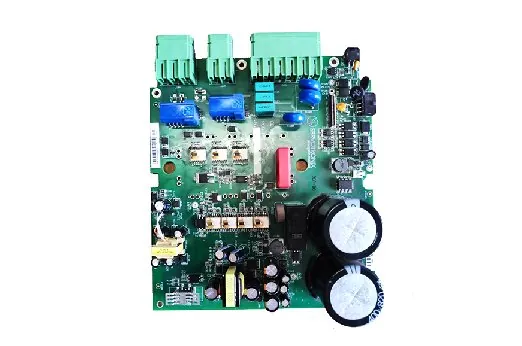
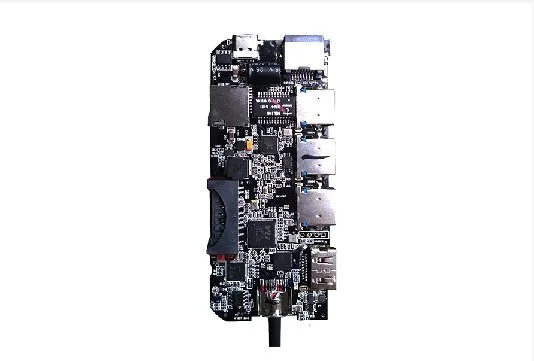
- Intake and triage. The dead board arrives with its damage. High-resolution photos, X-ray where internal damage is suspected, and a condition map separate "the fault" from "the design." If a second, working board exists — even installed in a sister machine — the reconstruction targets the healthy unit.
- Reconstruction. Layer-by-layer imaging recovers the copper; the netlist is extracted and organized into a reviewable schematic. Power sections, drive stages, isolation barriers and interfaces are checked by engineers who work on industrial boards daily.
- BOM and alternates. Every component is identified and lifecycle-audited. The parts that caused the failure — and the ones that will fail next — get modern, orderable replacements. High-stress sections are upgraded within form-fit-function limits where the customer agrees.
- Build. New Gerbers drive fabrication; the board is assembled on the same lines that build production PCBA. No garage rework — a proper manufactured board.
- Verification. Electrical test against the reconstructed netlist, inspection, then functional test — first on the bench, then in the machine itself where access allows. The layered strategy is described in why rigorous testing is crucial after reverse engineering.
- Handover. You receive the schematic, BOM and Gerbers. The next failed board on that fleet is a build order, not an emergency.
If the line is currently down, say so when you reach out. Where possible we prioritize getting a first unit verified fast, then use the recovered design data to build proper spares on a normal schedule. The emergency and the strategy are two phases of one project.
The risks specific to automation gear
Honesty about the hard parts is what makes the rest of this credible:
- Firmware and calibration. Many industrial boards carry firmware and factory calibration. A rebuild strategy must cover it — original files, licensed read-back, or a port. This is scoped at evaluation, not discovered later.
- Safety functions. Boards implementing certified safety circuits (e-stop chains, light curtains, safety relays) should not be replaced by rebuilt equivalents without re-evaluation. Certification doesn't transfer with the schematic. For those circuits, the OEM's certified channel or a formal re-certification is the responsible path.
- EMC in the cabinet. A rebuild that passes bench test still operates inside a noisy cabinet next to drives. Layout preservation and in-situ verification are how we manage that.
- Documentation discipline. The rebuild must be recorded — schematic revision, BOM revision, test results — so the spares you build in three years match the one that saved the line this month.
When reverse engineering is the wrong tool
- The board is still manufactured and available — buy it.
- The failure is isolated and the board is young — repair it.
- The board implements certified safety functions — use the certified channel.
- You don't own or have rights to the machine's IP — clarify that first.
For everything else — the discontinued, the undocumented, the strategically vital — a rebuild converts an availability problem into a manufacturing problem. Manufacturing problems are solvable on demand.
The takeaway
A million-dollar machine held hostage by a hundred-dollar board is not an irony; it's Tuesday in every factory in the world. Reverse engineering is the lever that moves the hostage: recover the design, modernize the parts, verify the build, own the data. The machine runs, the line produces, and the next failure is a planned purchase instead of a crisis.
Have a machine down, or a fleet drifting toward unsupported? Send us photos of the board and the machine context. We'll scope what a rebuild involves — timeline, alternates, verification plan — before you commit.