
Component obsolescence can end a product's life before the hardware does. The durable fix is reverse engineering the board and redesigning it around modern, available parts while keeping it form-fit-function compatible — so production and spares continue without re-qualifying the whole machine.
Your product will probably outlive its components
Industrial equipment routinely stays in service for 15 to 30 years. Medical devices, elevator controls, telecom infrastructure, test instruments — all engineered for long service lives, and all full of printed circuit boards designed around components that were current at the time.
The average semiconductor product lifecycle is far shorter — commonly 5 to 10 years — and shrinking as fabs retire older process nodes. So somewhere in your product's life, purchasing receives the notice: the part is EOL (end-of-life) or NRND (not recommended for new designs), with a last-time-buy window measured in months.
If the part is sole-sourced and has no drop-in replacement, that notice starts a countdown. Production halts when the window closes. Spares dry up. And a perfectly good machine becomes a stranded asset — not because it failed, but because a $3 chip inside it stopped existing.
Why components go end-of-life (and why it's accelerating)
Obsolescence isn't an anomaly; it's a property of the supply chain:
- Process node migration. Older silicon nodes are retired as capacity shifts to newer ones, taking mature logic, memory and interface parts with them.
- Foundry consolidation. Low-volume specialty parts get discontinued when their fab lines close or merge.
- Regulatory revisions. RoHS updates and similar directives can render an otherwise healthy part unsellable.
- Demand shifts. A part stays in the catalog only while enough volume justifies it.
The practical conclusion for any hardware team: plan for obsolescence instead of being surprised by it. And when it has already happened — when the board can no longer be built as designed — reverse engineering is the recovery path.
Your three options when a critical part is discontinued
| Option | Typical outcome | Risk |
|---|---|---|
| Last-time buy | Buy several years of stock before the deadline | Capital tied up in a quantity guess; moisture-sensitivity and shelf-life aging; eventually runs out anyway |
| Broker / gray market | Source "obsolete" stock after EOL | High prices, no traceability, real counterfeit and remarked-part exposure |
| Re-engineer the board | Redesign around current, orderable parts | Up-front engineering effort and requalification — but the board becomes sustainable again |
For a product with a short remaining life, a last-time buy may be rational. For anything with a long support horizon — installed bases, industrial fleets, equipment that must be repairable for a decade — redesign is the only option that actually ends the problem instead of postponing it.
How we re-engineer a discontinued board, step by step
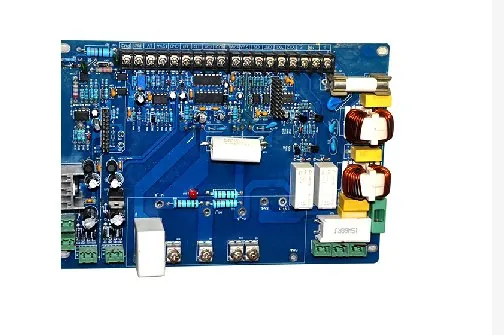
Re-engineering starts where documentation ended. The full capability is described on our reverse engineering service page; here is what it looks like on a real obsolescence project:
- Board intake and documentation. The physical board is photographed, X-rayed where needed, and inspected for damage. Everything known about the original design is collected — partial schematics, old BOMs, firmware files, anything that survives.
- Schematic and netlist reconstruction. Layer-by-layer imaging and connectivity extraction rebuild the circuit as a verified schematic. Every net is checked, not guessed.
- BOM lifecycle audit. Every component is identified and classified: active, not recommended, or EOL. Each discontinued line gets one or more current cross-references — same function, verified availability, comparable specs.
- Form-fit-function redesign. Where a drop-in isn't possible, the layout adapts: new footprints, adjusted surrounding circuitry, re-validated power and timing. Connectors, mounting holes, outline and external interfaces stay identical.
- Re-fabrication, assembly and verification. New Gerbers drive fabrication; the board is assembled with the modern BOM and verified — inspection, electrical test, and functional comparison against the original board's behavior.
What changes — and what must never change
Discipline in a re-engineering project is about knowing the difference between the two:
- Allowed to change: the specific ICs and passives, the layout around new footprints, internal test points (usually improved), silkscreen revisions.
- Must stay the same: connectors and pinouts, mechanical outline and mounting, electrical interfaces to the rest of the system, and firmware-visible behavior — memory maps, timing, signaling — unless a firmware change is explicitly planned.
This is the form-fit-function rule: the replacement board installs where the old one installed, connects to what the old one connected to, and behaves the way the old one behaved. Get all three right and the rest of the machine never knows the difference.
The most common re-engineering mistakes happen in the boring corners: a replacement MOSFET with a different gate threshold, an alternate memory part with a longer startup time, a "equivalent" RS-485 transceiver that misbehaves at cable extremes. Component substitution is an engineering decision, not a purchasing decision — which is why our assembly and sourcing team works directly from the reconstructed design data.
When reverse engineering is — and isn't — the right call
Honesty about fit saves everyone money. Re-engineering a discontinued board makes sense when: you own the board or its design rights; documentation is lost or never existed; the OEM or ODM is gone; or the installed base needs repair support for years to come. Our industrial automation repair article walks through a typical scenario.
It's the wrong tool when usable original design files still exist (a straightforward re-spin is cheaper and faster), when the product is simple enough to redesign cleanly from scratch, or when IP ownership is unclear — in that case, get a legal opinion first.
The takeaway
Obsolescence ends production only if you let it. A discontinued board is still a fully defined circuit — the schematic can be recovered, the BOM can be re-sourced with modern parts, and manufacturing data can be regenerated. The result is a board you can keep building for as long as the product lives.
Want to know what a rebuild of your board would involve? Send us the board or photos — our engineers will scope the project, flag the EOL parts, and give you a plan before any commitment.